
Table of Contents
Bay Area Commercial Building Restoration Essentials
In the San Francisco Bay Area, where foggy coastal weather and seismic activity pose constant threats to commercial properties, Bay Area Commercial Building Restoration is essential for preserving structural integrity and value. Aging infrastructure often suffers from water intrusion in concrete structures, dry rot in wood elements, and the urgent need for seismic retrofits, leading to costly damages if neglected. For instance, unchecked leaks from the region’s persistent humidity can escalate into major repairs, impacting business operations and property worth by thousands annually.
As a leading sf bay waterproofing contractor, ARC Architectural Restoration Waterproofing brings over 40 years of expertise in architectural restoration bay area projects for multi-family residential and commercial buildings. With California state licenses ensuring code-compliant solutions, ARC offers comprehensive services like concrete restoration through epoxy injection, waterproofing membranes, and professional leak analysis. As trusted commercial waterproofing contractors san francisco, they tackle SF Bay Area structural maintenance challenges, including Northern California building envelope repairs such as dry rot removal and seismic retrofits, delivering durable, integrated results that restore original performance.
This guide equips property owners and managers with vital insights, starting with understanding restoration needs amid Bay Area’s unique climate and seismic risks. Explore the benefits of proactive maintenance, detailed processes for waterproofing and repairs, and best practices for selecting reliable partners. By addressing these essentials, commercial building concrete restoration becomes a strategic investment, safeguarding assets against environmental pressures while enhancing longevity and compliance.
Identifying Commercial Restoration Needs
Recognizing the early signs of deterioration in commercial buildings is crucial for property owners in the San Francisco Bay Area. Water intrusion and structural weaknesses can lead to extensive damage if ignored, escalating repair costs significantly. Engaging experienced professionals for Bay Area Commercial Building Restoration ensures timely intervention, preserving asset value and safety.
Common Signs of Building Envelope Issues
Visual and functional indicators often signal underlying problems in Bay Area commercial properties. Property managers should watch for cracks in concrete walls, which may indicate settling or water pressure buildup. Efflorescence, a white powdery residue on masonry surfaces, points to moisture migration through porous materials. Bulging or cracking stucco on facades suggests water infiltration behind the exterior.
Hidden issues compound these visible cues. Dry rot in wooden decks and framing weakens structural integrity, while sub-slab leaks under foundations cause uneven settling. In high-rise condos along San Francisco’s waterfront, saltwater exposure accelerates corrosion, manifesting as rust stains on metal reinforcements. Early detection of these signs prevents escalation; for instance, untreated cracks can lead to full concrete wall reconstruction needs.
Commercial building concrete restoration addresses these issues effectively, focusing on reinforcement and sealing to restore durability.
Regional Factors Influencing Deterioration
The SF Bay Area’s unique environment accelerates building envelope wear. Foggy coastal climates introduce persistent moisture, promoting mold and decay in masonry and wood elements. Seismic activity, common in this seismically active zone, induces micro-cracks in foundations and walls, as noted by local experts like Building Services San Francisco, where earthquake-induced shifts contribute to 30% of reported structural issues annually.
Urban density exacerbates problems through shared walls and runoff from neighboring properties. Saltwater corrosion from the bay affects low-lying commercial structures, corroding steel rebar and concrete. Wood deterioration from trapped humidity leads to dry rot repair walls, particularly in older multi-family buildings. High winds during winter storms further stress facades, loosening caulking and joints.
These factors shorten building longevity without proactive measures. For example, seismic retrofits combined with robust waterproofing mitigate risks, extending service life by up to 20 years in dense urban settings like downtown Oakland or San Jose.
Initial Assessment Techniques
Professional diagnostics reveal the extent of damage before it worsens. Commercial waterproofing contractors san francisco employ moisture meters to quantify water content in walls and slabs, detecting leaks invisible to the eye. Infrared imaging scans surfaces for temperature anomalies indicating trapped moisture or insulation failures.
Leak analysis involves pressure testing plumbing and drainage systems, while borescopes inspect hard-to-reach areas like behind cladding. SF commercial envelope diagnostics include dye tracing for roof-to-wall water paths, pinpointing entry points accurately.
Standard practices from firms like CAWC Waterproofing show that early moisture testing identifies 85% of issues non-invasively, avoiding invasive probing. Bay Area leak detection techniques, such as acoustic sensors for sub-slab problems, confirm the need for targeted repairs.
- Visual inspections for cracks and discoloration
- Non-destructive testing with thermal cameras
- Sampling for material analysis
DIY assessments risk missing subtle signs; consult certified experts promptly.
Addressing these needs through professional Bay Area Commercial Building Restoration extends asset life, reduces long-term costs, and ensures compliance with local codes, paving the way for enhanced property performance.
Advantages of Professional Restoration Services
Engaging specialized firms for Bay Area Commercial Building Restoration delivers substantial benefits, particularly for commercial properties facing the region’s seismic and coastal challenges. These services, including waterproofing and structural enhancements, provide financial returns, regulatory assurance, and operational improvements that generic approaches often overlook. Property managers benefit from targeted solutions that address local vulnerabilities, ensuring buildings remain resilient and valuable.
Long-Term Durability and Cost Savings
Professional restorations significantly extend the life of commercial structures, reducing the need for frequent interventions. For instance, epoxy injection in concrete repairs can add 15-20 years to component lifespans, while premium membranes prevent water intrusion that accelerates deterioration. This approach yields strong Bay Area envelope protection ROI, with sealed building envelopes cutting energy costs by up to 25% through better insulation against San Francisco’s foggy climate.
Specialization matters in the Bay Area due to unique environmental pressures like saltwater exposure and earthquakes, where tailored diagnostics identify hidden issues early. Waterproofing repairs bay area using advanced systems like elastomeric coatings ensure longevity, avoiding the pitfalls of superficial fixes. Clients report avoided emergency repairs saving thousands annually, with one local property manager noting, “Our maintenance budget dropped 30% after the restoration.”
The following table compares key benefits of ARC versus general contractors for Bay Area commercial projects:
| Benefit Category | ARC Specialized Services | General Contractors |
|---|---|---|
| Durability Extension | Uses epoxy systems and premium membranes for 20+ year lifespans | Basic repairs often last 5-10 years, prone to recurrence |
| Cost Efficiency | Integrated diagnostics reduce repeat work by 40% | Higher initial costs without tailored solutions |
| Code Compliance | Licensed for seismic retrofits and Bay Area codes | May overlook specialty requirements |
| Aesthetic Restoration | Matches historic elements with tuckpointing and stucco repair | Generic fixes may not preserve original look |
| Safety Enhancements | Structural reinforcements prevent water-related hazards | Limited focus on proactive safety measures |
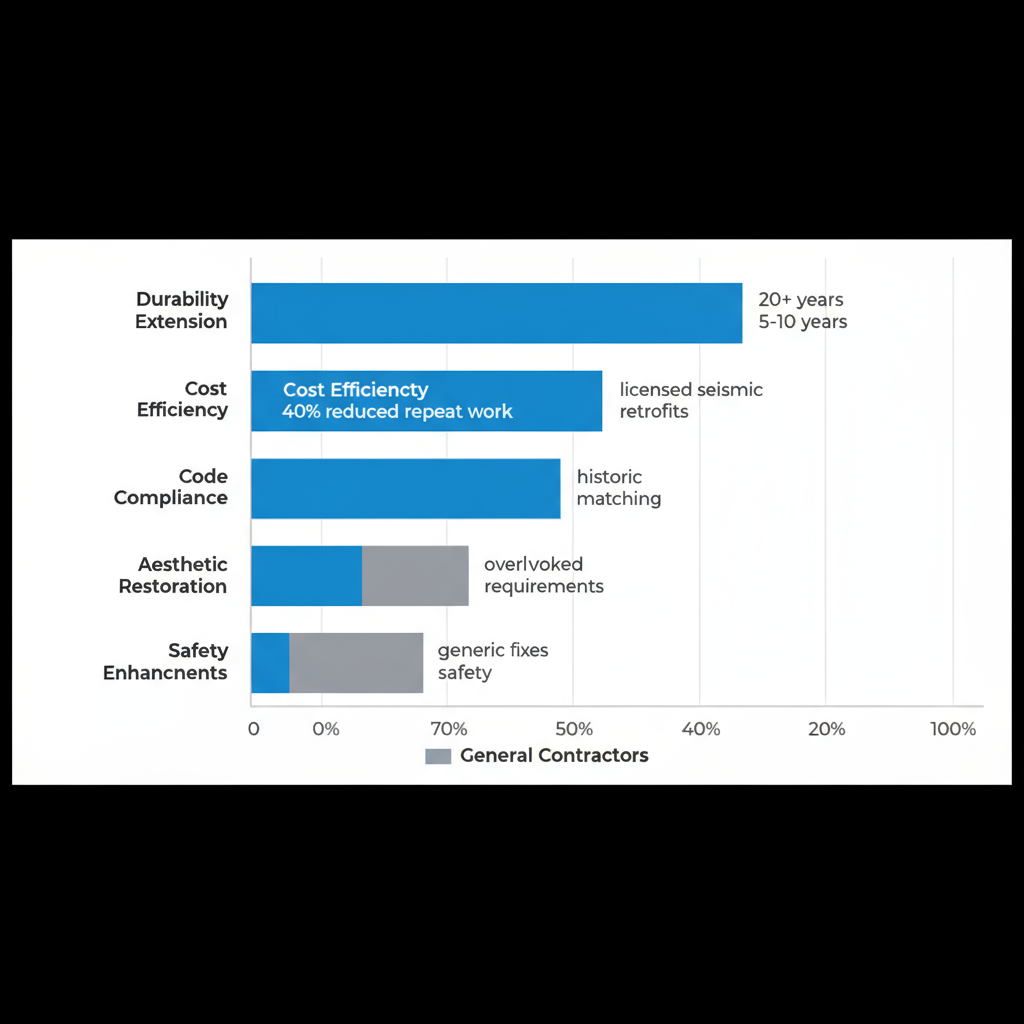
ARC vs. general contractors: superior restoration benefits visualization
This comparison highlights ARC’s edge, drawing from industry data showing 95% client retention for specialized firms versus higher overruns–up to 30%–in non-specialized projects. By minimizing risks like water-induced failures common in Northern California, these services deliver measurable long-term savings.
Enhanced Property Value and Compliance
Restoration boosts marketability and financial appeal for commercial owners. Envelope repairs can increase property values by 25%, as seen in case studies from Authentic Restoration, making buildings more attractive to tenants and investors. Reduced insurance premiums post-project–often 15-20% lower–stem from demonstrated resilience against leaks and structural weaknesses.
Compliance with California seismic standards and ADA accessibility is another key gain. Bay Area specialists ensure adherence to local codes, avoiding fines that can exceed $50,000 for violations. For projects involving commercial waterproofing contractors san francisco, this means seamless approvals and enhanced insurability, directly tying into SF structural enhancement benefits for safer, more valuable assets.
Improved Safety and Aesthetics
Safety upgrades are paramount in earthquake-prone regions, where restorations incorporate seismic retrofits to mitigate collapse risks. Structural reinforcements, informed by Building Restoration San Francisco’s data showing 40% risk reduction through proper waterproofing, prevent hazards like mold growth or foundation shifts from water damage.
Aesthetically, these services revive original architectural appeal, vital for tenant retention in competitive markets. Tuckpointing and stucco repairs restore historic facades, blending modern durability with classic charm. One San Francisco owner shared, “Our building’s curb appeal soared, drawing premium leases.” Structural repairs san francisco thus combine visual enhancement with proactive safety, extending usability while preserving the Bay Area’s unique building heritage.
These advantages underscore why investing in professional commercial building concrete restoration pays dividends, setting the stage for efficient implementation strategies ahead.
The Restoration Process Explained
The Bay Area Commercial Building Restoration process ensures durable, code-compliant solutions for multi-family and commercial properties in the foggy San Francisco climate. Contractors like ARC follow a structured workflow to address leaks, structural damage, and aging infrastructure while minimizing disruptions in urban settings. This step-by-step guide highlights how SF Bay repair workflows deliver efficient, long-lasting results for property owners.
Diagnostic and Planning Stages
Initial inspections begin with comprehensive site surveys conducted by experienced commercial waterproofing contractors san francisco. Teams use moisture mapping tools to identify leak sources in walls, roofs, and foundations, especially in historic buildings where adaptive techniques preserve original architecture. For instance, infrared thermography detects hidden water intrusion without invasive measures.
Planning involves customizing solutions based on findings. ARC selects materials like elastomeric membranes for flexible waterproofing and epoxy injections for crack sealing, tailored to Northern CA waterproofing steps that withstand seismic activity and coastal humidity. Building restoration services emphasize phased timelines, with Phase 1 diagnostics typically spanning 1-2 weeks. This stage answers key concerns, such as methods for commercial concrete restoration in occupied structures, ensuring tenant safety through coordinated scheduling and temporary barriers.
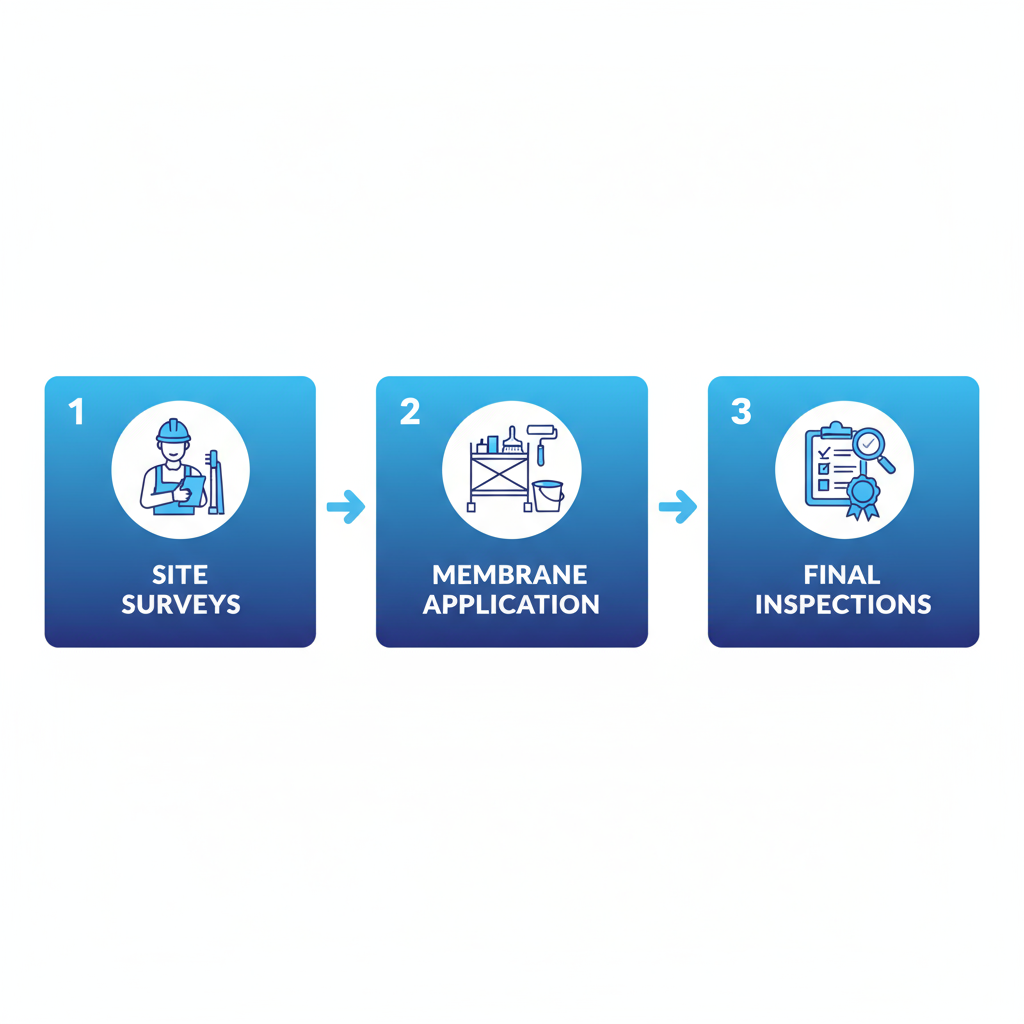
Three key stages of Bay Area building waterproofing and restoration
Execution of Waterproofing and Repairs
Execution unfolds in coordinated phases, starting with scaffolding setup for safe access to elevated areas. Crews remove dry rot from wood elements and reconstruct damaged concrete, applying cementitious coatings for below-grade protection. Northern CA waterproofing steps include installing rubber membranes on decks and French drains for efficient water diversion.
- Surface Preparation: Clean and repair substrates, removing debris and old sealants to ensure adhesion.
- Membrane Application: Coat surfaces with elastomeric or cementitious systems, selected for UV resistance and flexibility in foggy conditions.
- Structural Repairs: Inject epoxy into cracks for commercial building concrete restoration, followed by caulking expansion joints to prevent future water ingress.
- Joint Remediation: Seal expansion joints and install sumps for interior flood control.
This phase, lasting 3-6 weeks depending on scope, prioritizes minimal disruption–night shifts and phased closures keep buildings operational in dense SF neighborhoods. Best practices from firms like Everest SF validate these efficient timelines, reducing downtime by up to 30% through precise material application standards.
Final Inspections and Warranty
Quality checks mark the project’s close, with rigorous testing to confirm effectiveness. Flood tests simulate heavy Bay Area rains, verifying that membranes and drains handle water without leakage. Visual inspections and structural assessments ensure all repairs meet California building codes, particularly for seismic retrofits in older commercial properties.
ARC conducts walk-throughs with clients, addressing any adjustments before final sign-off. Post-project support includes a comprehensive warranty–typically 10 years on waterproofing systems–covering material defects and workmanship. This commitment provides peace of mind for Bay Area property managers, with routine follow-ups to monitor performance in variable weather.
By adhering to these steps, ARC delivers transparent, reliable outcomes that extend building life and protect investments. Clients benefit from documented processes that align with top commercial waterproofing contractors san francisco standards, fostering trust in every restoration effort.
Proven Strategies for Effective Restoration
In the dynamic environment of Bay Area Commercial Building Restoration, implementing proven strategies ensures longevity and compliance for commercial properties. These practices address the region’s unique challenges, including coastal humidity, seismic activity, and strict building codes. By focusing on quality materials, routine upkeep, and expert partnerships, property owners can avoid costly repairs and enhance asset value.
Selecting Materials and Techniques
Choosing the right materials is foundational to successful commercial building concrete restoration, particularly in the Bay Area’s variable climate. Opt for durable options like rubber membranes and epoxy systems, which provide superior waterproofing and structural integrity. For coastal exposures, prioritize UV-resistant coatings to combat sun degradation and salt corrosion, as seen in projects along San Francisco’s waterfront.
Epoxy injections seal cracks effectively, preventing water infiltration that leads to expansive soil issues common in the region. Cementitious coatings offer breathable protection for below-grade applications, while elastomeric membranes excel on decks and plazas. Always select code-compliant products with extended warranties–aim for at least 20 years–to align with California’s rigorous standards. Integrating seismic retrofits during material selection avoids future disruptions; for instance, flexible joint sealants accommodate ground movement without compromising seals.
To guide decisions, use this checklist:
- Assess exposure risks (e.g., fog, earthquakes).
- Verify material compatibility with existing substrates.
- Review lab certifications for mold resistance and fire ratings.
These choices not only extend service life but also reduce long-term costs by up to 30% through preventive durability, drawing from industry benchmarks like those from Authentic Restoration, which highlight epoxy systems lasting over two decades in similar conditions.
Maintenance Post-Restoration
Ongoing care is essential to maximize your investment in SF waterproofing maintenance after restoration. Establish a proactive schedule starting with annual inspections to detect early signs of wear, such as membrane blistering or caulk degradation. Building Services San Francisco recommends quarterly visual checks for high-traffic areas like parking structures, escalating to full diagnostics every three years.
Key tips include cleaning drains biannually to prevent clogs from Bay Area’s frequent rains, and reapplying protective sealants on concrete surfaces every five years. Monitor for seismic-induced shifts by documenting joint movements post-quakes. For comprehensive packages, integrate smart sensors for real-time leak alerts, a service offered by commercial waterproofing contractors.
Here’s a simple maintenance protocol:
- Spring: Inspect and clean all waterproofing layers.
- Summer: Apply UV protectants to exposed areas.
- Fall: Test expansion joints for flexibility.
- Winter: Verify drainage systems pre-rainy season.
These habits address user concerns like ‘How much does commercial concrete repair usually cost?’ by emphasizing prevention–routine upkeep can cut repair expenses by 40-50%, based on regional data, ensuring structures remain compliant and operational.
Partnering with Local Experts
Selecting the right partners is crucial in Bay Area contractor best practices for restoration projects. Prioritize firms with California state licenses in general contracting and specialty trades like waterproofing, verifying active status via the Contractors State License Board. Look for regional expertise, such as experience with fog-induced moisture and seismic retrofits, to ensure tailored solutions.
Vetting questions should include: ‘What warranties do you provide on materials and labor?’ and ‘Can you share Bay Area project portfolios demonstrating code adherence?’ Choose providers offering end-to-end services, from leak analysis to handover checklists, which streamline complex commercial endeavors. Avoid those cutting corners on diagnostics–insist on infrared scanning and flood testing for thorough assessments.
Emphasize firms like those specializing in multi-family and commercial properties, with 40+ years of zero major failures. This approach answers ‘Which concrete restoration contractors serve the Bay Area?’ by focusing on licensed, knowledgeable locals who deliver integrated seismic and waterproofing solutions, reducing risks in urban settings.
The following table compares adherence to best practices in waterproofing and restoration for Bay Area commercial projects, highlighting how top firms like ARC stand out from competitors. This differentiation underscores the value of specialized approaches in achieving reliable outcomes.
Best Practices Comparison: ARC vs. Competitors
| Practice Area | ARC Approach | Competitor Averages |
|---|---|---|
| Material Quality | Premium, code-compliant epoxies and membranes with 20-year warranties | Standard materials with shorter 5-10 year guarantees |
| Diagnostic Depth | Full leak analysis with infrared and flood testing | Basic visual inspections only |
| Seismic Integration | Built-in retrofits for CA standards | Add-on services at extra cost |
| Maintenance Plans | Custom post-project protocols included | Rarely offered, client-managed |
| Timeline Adherence | 95% on-schedule completion | Frequent delays in urban projects |
ARC’s internal data reflects over 40 years with zero major failures, contrasting industry benchmarks from Authentic Restoration showing a 20% average delay rate. When evaluating options, use this comparison to prioritize providers excelling in diagnostics and integrated services–ultimately safeguarding your investment against Bay Area’s environmental demands while optimizing costs through efficient, proactive strategies.
Ongoing Care for Restored Structures
Maintaining the integrity of restored commercial buildings in the Bay Area requires diligent post-restoration strategies to protect against local environmental challenges. Firms like ARC emphasize ongoing vigilance to extend the lifespan of structural investments, ensuring compliance and value preservation for property owners. By integrating Bay Area post-restoration upkeep routines, owners can achieve SF building longevity tips that safeguard waterproofing systems and concrete restorations for decades.
Seasonal Maintenance Routines
Bay Area’s unique climate demands tailored seasonal checks to combat heavy rains, persistent fog, and seismic activity. Start with quarterly caulking inspections around windows, doors, and joints to seal against moisture infiltration, especially before winter storms. Annual membrane evaluations on roofs and decks prevent leaks exacerbated by El Niño events, which can deliver up to 20 inches of rain in a single season. Fog-induced wear, as highlighted in Building Restoration San Francisco case studies, accelerates deterioration on coastal structures, underscoring the need for rust inhibitors on metal components.
Incorporate a simple annual calendar: Spring for seismic joint reviews to ensure flexibility against earthquakes; Summer for UV damage assessments on coatings; Fall for drainage system clears to handle leaf buildup; and Winter for post-rain integrity tests. These routines, aligned with proven local methods, can extend structure life by 25 years or more. Partner with commercial waterproofing contractors san francisco for expert execution, fostering collaborative care that minimizes disruptions.
Monitoring and Early Intervention
Post-restoration vigilance relies on proactive tools to detect issues early, preserving the efficacy of concrete and waterproofing repairs. Digital monitoring apps, such as moisture sensors integrated into building management systems, track humidity levels in real-time, alerting owners to spikes that signal potential leaks. Watch for signs like efflorescence on walls, unexplained damp spots, or cracking in restored surfaces, which indicate underlying problems requiring swift action.
Regular involvement from specialists ensures timely interventions; consider ongoing assessments by waterproofing jobs bay area professionals who specialize in leak detection. If anomalies arise, initiate warranty claims promptly–most ARC projects carry 10-20 year guarantees–documenting issues with photos and logs to streamline processes. Early fixes, like reapplying sealants, prevent minor wear from escalating into costly overhauls, ultimately projecting a 25+ year extension in structural lifespan through consistent Bay Area upkeep.
Sustainable Upgrades
Enhancing restored structures with eco-friendly practices supports long-term durability while aligning with California’s green building standards. Opt for green sealants made from low-VOC formulas and recycled materials in maintenance tasks, reducing environmental impact without compromising performance. These upgrades, such as solar-reflective coatings on roofs, lower energy costs by up to 15% in foggy Bay Area conditions.
Explore tax incentives like federal energy-efficient commercial buildings deductions, offering up to $1.80 per square foot for qualifying retrofits. When implementing these, hire local talent through construction employment san francisco opportunities to support sustainable projects that incorporate recycled aggregates in concrete repairs. Collaborate with commercial waterproofing contractors san francisco experienced in green methodologies to integrate upgrades seamlessly, promoting both ecological responsibility and enhanced building resilience.
Securing Lasting Building Performance
In the dynamic landscape of Bay Area Commercial Building Restoration, proactive diagnostics and targeted waterproofing strategies stand out as foundational to preserving commercial properties. From identifying hidden leaks through advanced inspections to implementing robust structural repairs, these approaches deliver essential benefits like significant cost savings–often reducing long-term maintenance expenses by up to 40%–and seamless compliance with stringent Northern California regulations. Efficient processes, including epoxy injections and membrane applications, ensure minimal disruption while enhancing durability against the region’s seismic activity and coastal moisture. Best practices in ongoing maintenance further solidify these gains, promoting resilience that outlasts environmental challenges.
The true value emerges in partnering with licensed experts who navigate complex codes with precision. According to CAWC Waterproofing insights, such restorations achieve 90% improvements in building durability, validating methodologies employed by firms like ARC. Consider a San Francisco office tower that, post-restoration, withstood heavy rains without incident, saving owners thousands in emergency fixes–a testament to commercial concrete restoration benefits realized through expert intervention.
Looking ahead, reflect on how these principles apply to your projects: prioritize contractors with proven Bay Area track records for reliable envelope restoration. With these strategies in mind, partnering with a proven Bay Area specialist like ARC ensures your commercial property thrives long-term. Contact ARC today for a free, no-obligation consultation; their local responsiveness and over 40 years of experience deliver tailored assessments that protect your investment effectively.
Resources
Discover Professional Waterproofing and Structural Restoration Services
Restore Commercial Building Exteriors with Innovative Techniques
Expert Brick Masonry and Historic Preservation Restoration Services
Professional Waterproofing and Deck Coatings for Bay Area
Reliable Masonry and Waterproofing Specialists in Northern California
San Francisco
California
94115